
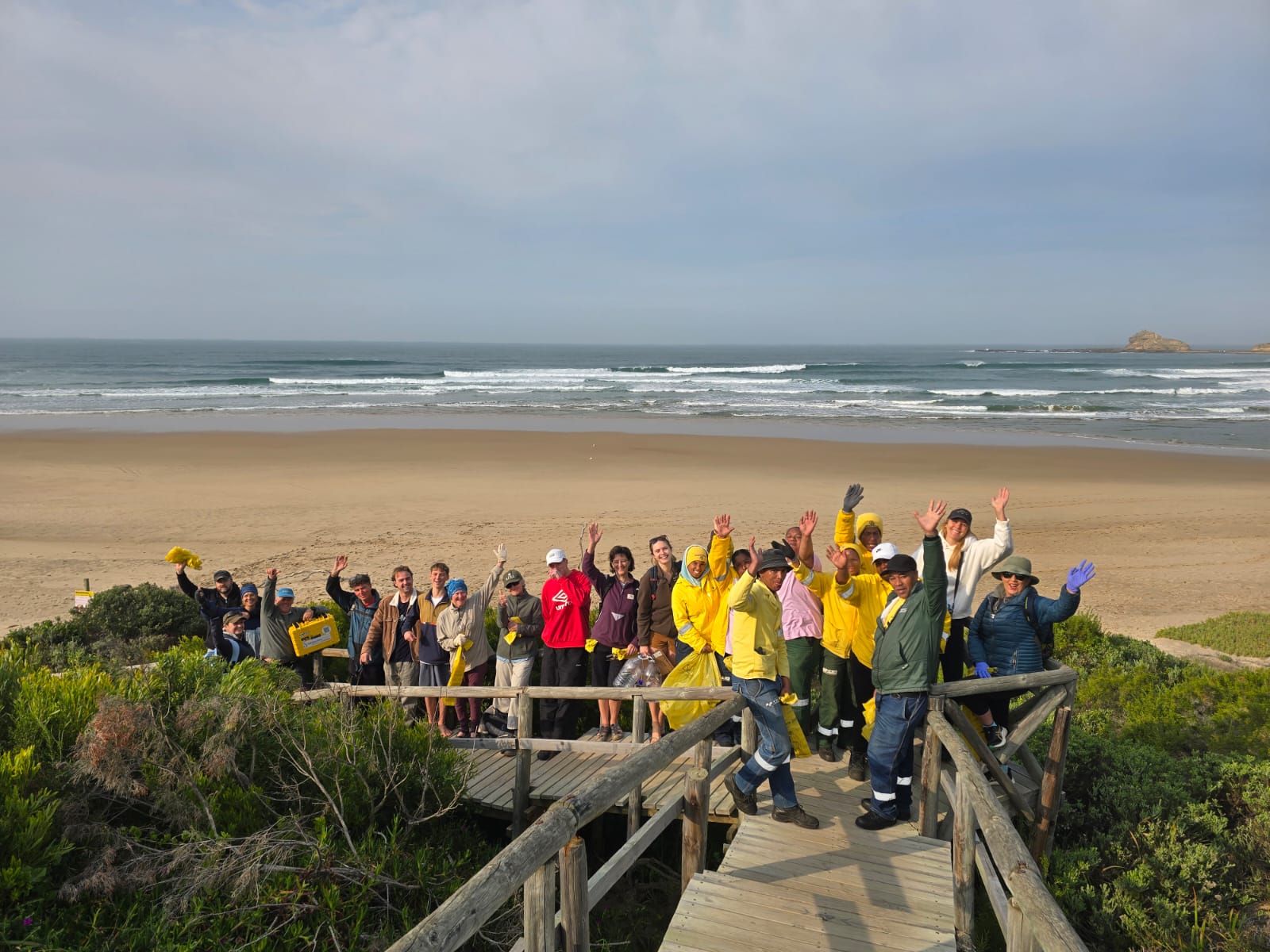
On Saturday, 20 September 2025 Apex Conservation Services, together with Eden Surfriders Association hosted a Coastal Cleanup along the Garden Route to celebrate International Coastal Cleanup Day. There were a total of twelve zones where our cleanup teams were involved. This included coastal areas located from Victoria Bay to Goukamma Nature Reserve and Sedgefield lagoon, which spanned around 25 km.

This event was supported by a total of 165 participants. We collected 71 bags of rubbish off our coast, which had a combined weight of approximately 197 kg.

The day started off with teams meeting at each zone, and teams were given an introduction to coastal pollution and the aim of this coastal cleanup, and they were briefed on the plans for the day. These teams were located at Victoria Bay, Wilderness, Kleinkrantz, Swartvlei, Myoli Beach, Goukamma Nature Reserve and Sedgefield Lagoon.

Teams then went out together to undertake a quadrant survey to identify the different types of rubbish present. We drew quadrants of 2x4m at the highwater mark, identified rubbish within each of these, and separated these different types of rubbish.

Altogether, we undertook 10 quadrant surveys. Our cleanup teams found a number of different types of rubbish in these quadrants. This included larger pieces of rubbish, as well as microplastics, which were dominant across all sites. Micro-plastics are small pieces of plastic which pose a huge threat to marine life and are often a less obvious source of pollution.

We identified a number of different types of rubbish in the quadrants within each zone. The number of different types of rubbish found in the quadrants is provided below.


The teams at each zone then started their cleanup, walking along the beach and lagoon and surrounding areas, collecting rubbish.


Once the rubbish had been collected, this was weighed and disposed of.


We collected a number of key indicators of plastic pollution in 5L bottles. One 5L bottle was used to collect cigarette butts, sucker sticks, and earbuds. The other 5L bottle was used for bottle caps and lighters, which were cleaned up off the beaches.

At the end of the day we handed out prizes from the lucky draw, which included a getaway in Hoekwil sponsored by Mountain Magic, a voucher sponsored by Joplins Steak Bar, as well as caps from Apex Conservation Services. We also handed out participation prizes to participants who had gone the extra mile!

We are grateful to everyone who gave of their time and energy to help in this event, so a huge thanks from our side. Importantly, we would like to thank Eden Surfriders Association, the Oystercatcher Surf Club, Slow Town Surfers, The Strandloper Project and daboys for joining us in making this event possible. We would also like to thank SANParks Biodiversity Social teams for their involvement in this event, and thank SANParks for providing us with the bags that we used to collect rubbish in for the coastal cleanup.

We hope that this coastal cleanup event helped create awareness of coastal pollution, and especially the threats that microplastics pose to our coastal systems and marine life. The Apex team would like to encourage all participants to continue engaging in cleanup activities and to think about how they can get involved in cleaning up the coast and reducing their waste in their everyday lives. We look forward to future collaborations with everyone to continue to take care of our shared coastal spaces together.
Contact us for more information on the Coastal Cleanup, or any inquiries about the conservation work that we do.