
Developing Practical Methods to Measure Improved Water Quantity and Quality Post Invasive Alien Plant (IAP) Clearing
Specialist Study
Client:
The Western Cape Government: Department of Environmental Affairs and Development Planning
Consultants:
Apex Conservation Services
Keurbooms Catchment, Western Cape, South Africa
Year: 2023
Click on images to enlarge


IAPs have been the source of major concern due to their negative effects on ecological infrastructure (EI). The Ecological Infrastructure Investment Framework, 2021 (EIIF) was developed under the Western Cape Provincial Biodiversity Strategy and Action Plan (PBSAP) to help guide decision-makers from both the private and public sectors in where and how to invest to promote the resilience of the Province’s EI.
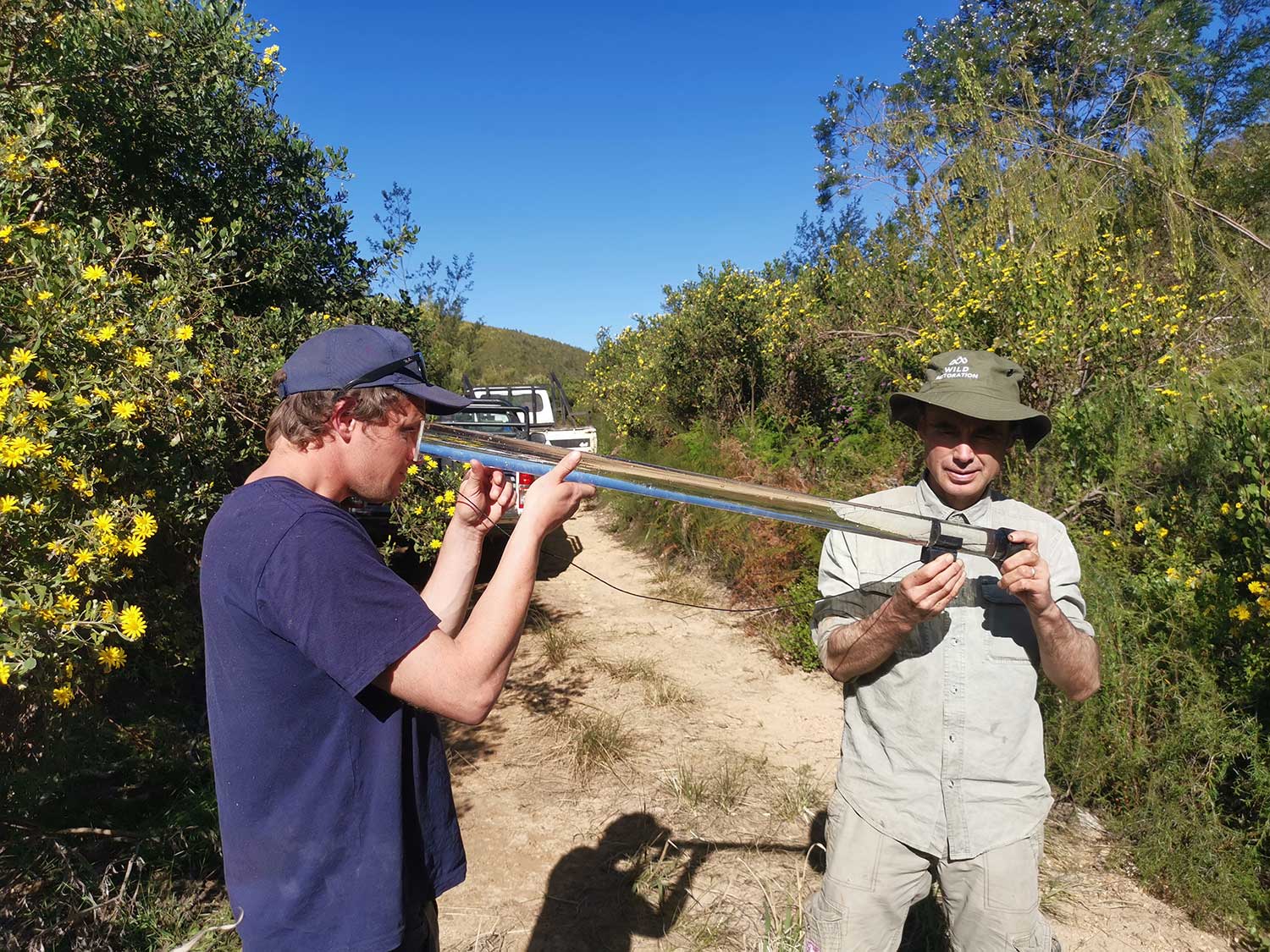
This project aims to develop an appropriate, easy-to-use and accessible methodology to measure water quantity and quality gains resulting from clearing IAPs, which landowners and land users can use. This project also aims to guide landowners and land users regarding establishing baselines for the watercourses in question, and how, when and where measures using the identified method should be taken to quantify the impact of clearing IAPs. Lastly, the project aims to consider the viability of a stepwise rollout of the identified methods through the Western Cape (WC). In order to develop the monitoring guidelines, a literature review of existing monitoring methods was conducted, relevant stakeholders were engaged, and fieldwork was done to map IAPs and undertake an ecological baseline assessment. During the field visit several of the proposed methods were tested to determine their practicality and ease of use. This project produced a number of key resources, including an ecological baseline assessment summary for the study site, a pilot project design report, and a monitoring guideline which instructs users on how to implement proposed monitoring techniques within their own context. This project enables land users to monitor and quantify changes to the water quantity and quality, as well as to the ecological baselines of their land which result from clearing AIPs.
This project can be used to help inform users on whether IAP clearing is resulting in a measurable change, and may help determine which clearing methods, and which species clearing is most effective in a given area. This information can be shared with stakeholders and used to help motivate for investments in clearing of AIPs throughout the WC. Coupling this clearing with rehabilitation and restoration efforts will further aid in increasing the water quality and help mitigate potential impacts following AIP clearing, as well as enhancing biodiversity.